

Diet and Exercise Moved 16 Aging Clocks. Supplements Didn’t
A Yale analysis of 51 studies finds diet and exercise move aging clocks reliably, if modestly, while over the counter supplements barely register.
Section
Health, longevity and biotech, read at the source. Biomarkers are tracked, but the verdict always waits for outcomes: events, function, years lived well.
A Yale analysis of 51 studies finds diet and exercise move aging clocks reliably, if modestly, while over the counter supplements barely register.

As tau builds in healthy older brains, deep sleep waves stop traveling and memory slips. A strong signal, but nobody yet knows which comes first.
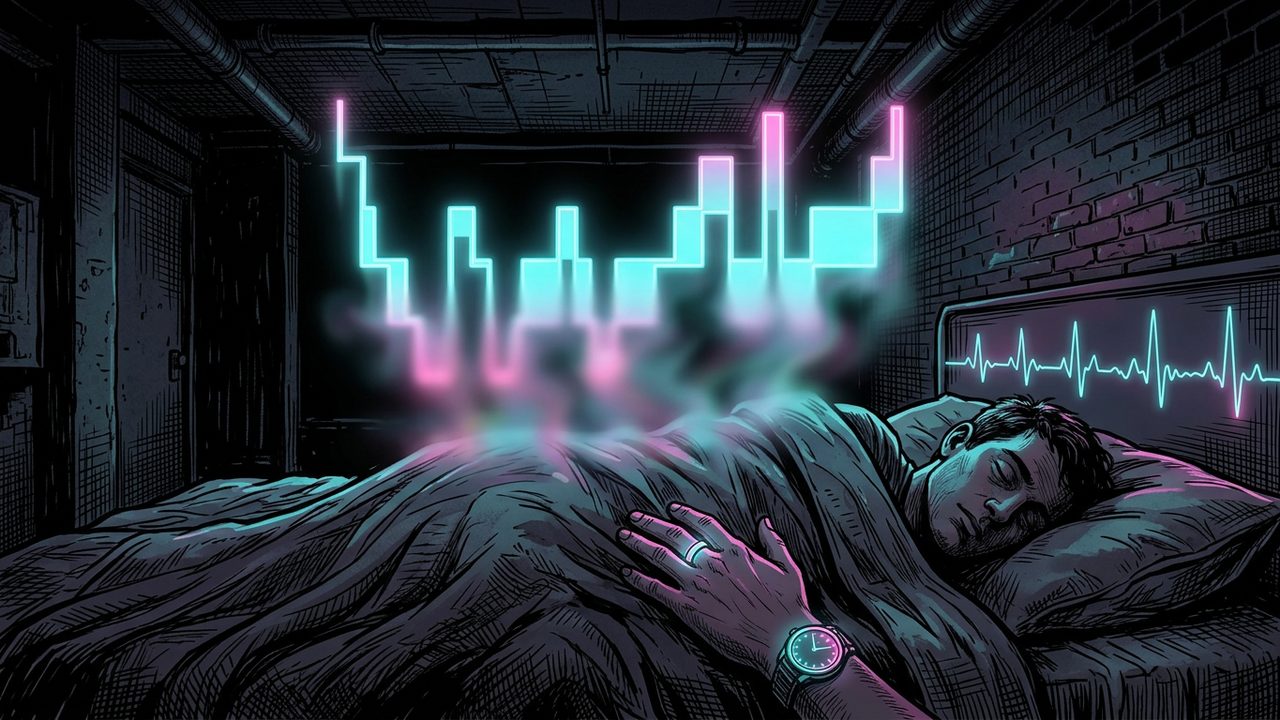
Every tracker in the lab studies could tell when people were asleep; none could reliably say how deeply, least of all in older adults and patients.

A daily tablet now cuts LDL by more than half, while the injectable version of the same drug class was linked to 20% fewer deaths in people with no prior heart attack.

One blood test for life sounds simple, but this year's research shows the result can move, the risk has no clean cutoff, and no Lp(a) drug has proven it saves hearts.

Retatrutide's 20.8% assumes nobody quit, and Viking's 90% comes from a group of 11. The numbers behind the two biggest obesity drug headlines of September.

Trevogrumab and apitegromab saved kilograms of lean tissue in phase 2 trials, but no study has yet shown that it makes anyone stronger.

Novo won at the low end of the dose range, 12.4 versus 9.1 percent. Lilly won at the top, 23.3 versus 14.8, and lost up to one patient in four to side effects.

Orforglipron cleared a heart safety bar against insulin glargine, 4.2 versus 5.0 percent, and posted a mortality gap the trial was never built to prove.

Pelacarsen lowered the biomarker in 8,323 patients. Events did not follow. What that gap teaches about every longevity claim.

A Yale reanalysis of 12 epigenetic clocks says single clock drops don't reproduce. Then come the claims: GLP-1s, a skin cream, 2 to 3 years younger.

ACHIEVE-3, 1,698 adults, 52 weeks: in the primary analysis HbA1c fell 1.91 points against 1.47. A real head to head, run by one of the duelists.
Twelve weeks of lifting: vegetarians gained 0.38 kg of limb muscle, omnivores 0.66 kg. The trial could not show the two diets were equivalent.
Against placebo, the endothelin blocker lowered systolic pressure by about 4 mmHg on top of three drugs. New post hoc data on obesity and kidney risk.

Sironax's FORGE-LM trial is half enrolled. The endpoint is body composition, which is the right question. Enrollment, though, is not a result.

809 adults, seven days of wrist sensors: robust temperature rhythms tracked with better metabolic markers, light with lower triglycerides. Association only.
Not medical advice, ever. What a study measured, what it didn't, and who it was measured in, stated on the page. Preprints and press releases wear their labels until the peer reviewed paper exists.
One email a week: the 5 facts that mattered in AI, health and longevity, each checked against the original source. No spam. Unsubscribe in one click.
By subscribing you agree to receive the newsletter. See the privacy policy.